Pelvic Tilt Test: Why Pelvic Control Matters More Than You Think
Pelvic Tilt Test: Why Pelvic Control Matters More Than You Think
The pelvis plays a far bigger role in movement and performance than most people realise. It’s the link between your lower body and upper body, and how well you can move and control it determines how efficiently force transfers through your body.
The Pelvic Tilt Test gives us insight into two key things: firstly how mobile your hips and lower spine are, and secondly how well you can control the position of your pelvis. Both of these are essential for maintaining your posture, generating power, and protecting your lower back.
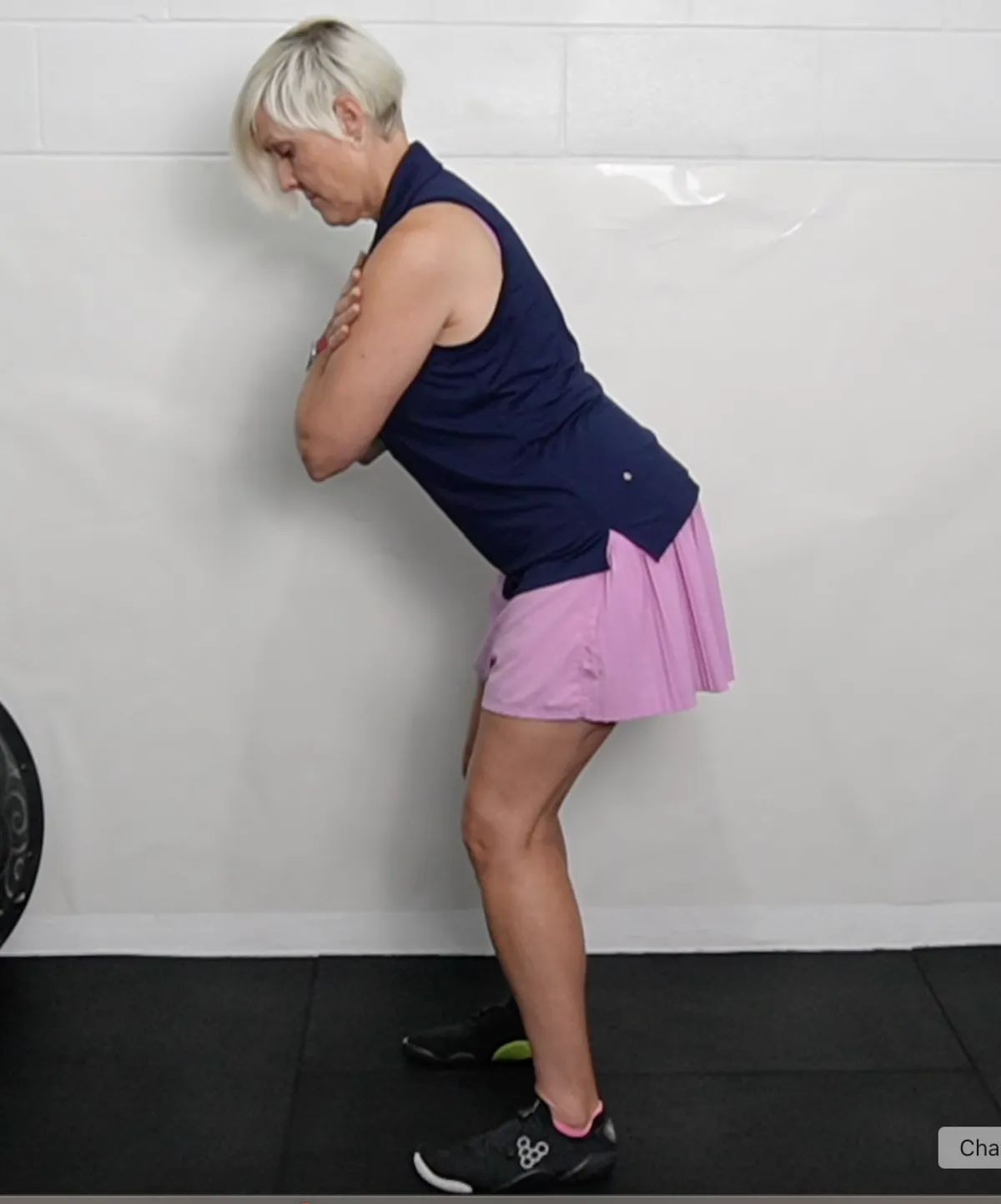
To perform the test, start in a normal golf setup posture with your arms crossed over your chest. Before you move, take note of your natural posture. Some people sit in a more exaggerated arch through the lower back, others are relatively neutral, and some tend to tuck under into a rounded position.
From here, the movement happens in two parts. First, tilt the pelvis forward, increasing the arch in the lower back. Then return to your starting position and tilt the pelvis backward, gently flattening the lower back. The order matters. Always tilt forward first, especially if you already start in a more arched position.
What matters most isn’t how big the movement looks or feels, but how controlled it is. Ideally, your pelvis moves smoothly forward and backward without your knees bending or your hips thrusting bringing you out of your posture. Shaky or ratcheting type movement often points to a lack of coordination rather than pure stiffness.
It’s not uncommon to see limitations in one direction more than the other. If you have difficulty tilting backwards,it’s frequently linked to tight hip flexors, stiffness through the lumbar spine, or weak glutes and abdominals. This pattern is often referred to as lower crossed syndrome and is extremely common in people who sit a lot or train without addressing posture and control.
Importantly, the Pelvic Tilt Test is a starting point, not a diagnosis on its own. A pelvic tilt requires a combination of hip and spinal movement. An anterior tilt needs hip flexion and lumbar extension. A posterior tilt requires hip extension and lumbar flexion. If one piece is restricted, the pelvis can’t move freely. In other cases, the range exists but the brain struggles to coordinate the movement.
This is why testing matters. Without it, people often stretch what isn’t tight or strengthen what can’t move properly. Understanding whether the limitation is mobility or motor control changes the entire training approach.
Whether you’re focused on golf performance or simply want to move and feel better, pelvic control underpins efficient movement, spinal health, and long-term resilience. Awareness is the first step — and from there, training becomes far more effective.
👉 This week’s video shows the test. View it inside the Performance Hub
