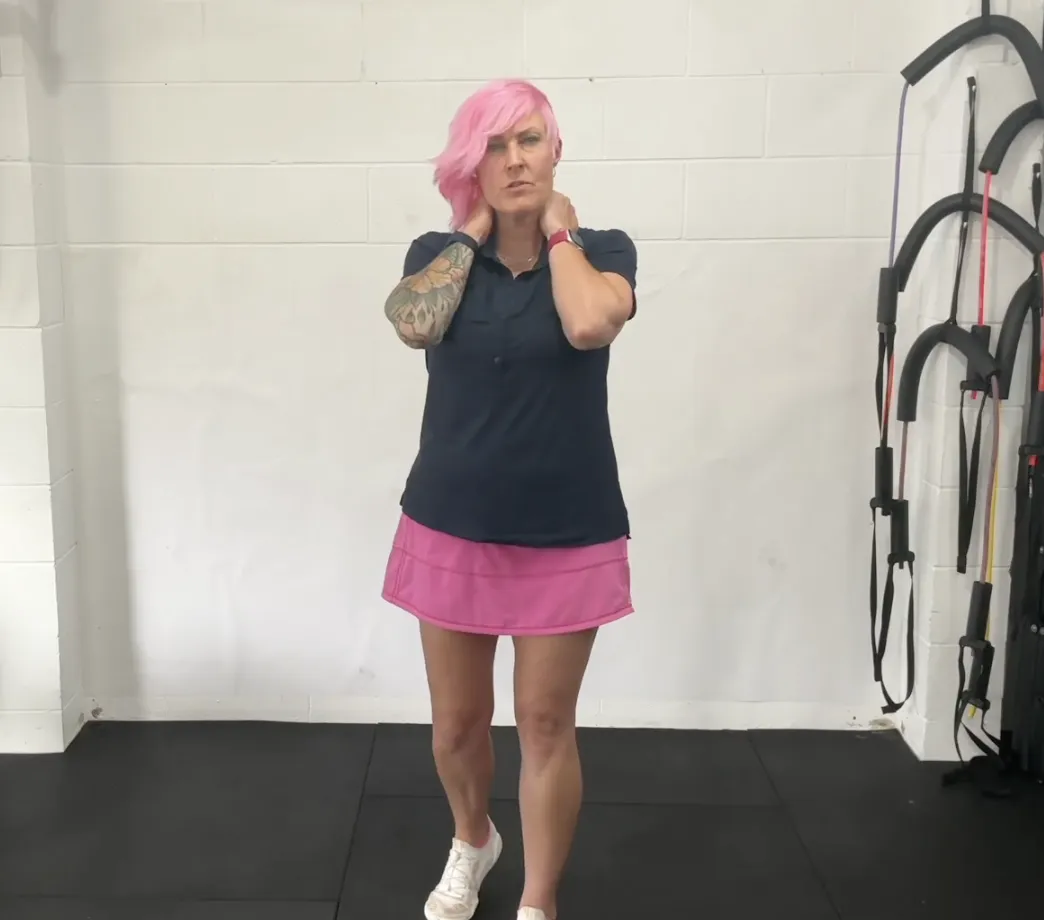
3 Signs You Need Shoulder Mobility Work
3 Signs You Need Shoulder Mobility Work
If your neck feels tight and your posture’s collapsing by the end of the day… your shoulders are telling you something.
It's that time of year where December stress hits hard — long days, end-of-year deadlines, travel, sitting more and training less.
For golfers, that tension might show up at the top of your backswing.
For my real life athletes, it often shows up as neck pain, headaches, and that rounded “I’ve been at my desk too long” posture.
Let’s break down 3 signs your shoulders need some attention.
1. Neck tension that just doesn’t quit
If your shoulders are stiff, your neck picks up the slack — which is why tight shoulders often disguise themselves as neck pain or headaches.
2. You struggle to reach overhead without arching your back
If your ribs pop up or your lower back arches when you lift your arms, that’s a sign you’re missing clean shoulder flexion.
3. Rounded posture by lunchtime
If your shoulders drift forward through the day, your upper back and shoulder stabilisers are tired and tight — you may especially notice this during December desk marathons.
If you’re nodding at any of these… try this quick test.
Mini Test: The Wall Overhead Reach
How to do it
Stand with your back against a wall
Ribs tucked down towards your hips
Keep your arms straight
Reach overhead without letting any daylight between your back and the wall
What you’re looking for:
✔️ Smooth reach with your hands touching the wall: great mobility
❌ Back pops off the wall, your ribs flare or you can't get your thumbs to the wall with straight arms: shoulder restriction, tight lats, or upper-back stiffness
This tells you exactly where your overhead movement is breaking down.
A Chill Way to Release Shoulder Tightness: Floor Snow Angels
The good news? You don’t need equipment.
How to do it
Lie on your back with knees bent
Arms out to the sides, palms up
Slide your arms overhead in a wide arc
Keep your elbows and wrists close to the floor
Move slow, breathe through it
Aim for 6 to 10 reps
Why it works
This opens the front of your chest and shoulders and improves the glide of your scapula.
It targets your rotator cuff and upper back muscles — the ones responsible for stabilising the shoulder and keeping tension out of your neck.
It helps you move with ease instead of tension.
Golfers vs Real-Life Athletes — What You’ll Feel
For Golfers
Cleaner swing path
Less tension at the top-of-backswing
Better ability to set the club
For Real-Life Athletes
Better posture all day
Less neck strain
Easier overhead movement in training
If you want to figure out exactly what’s limiting your shoulder range of motion— mobility, stability, or strength — message me on WhatsApp and we’ll map out your next steps.
👉 Chat on WhatsApp
